
If you plan to build, add, or improve a property, a property survey often decides how fast your permit moves—or why it stalls. Many homeowners assume permits fail because of drawings or paperwork. In reality, Metro reviewers usually pause projects because the site conditions were not verified the right way. That’s where a clear, up-to-date property survey makes the difference.
Why permits slow down in Nashville more than people expect
Nashville grows fast. Because of that, Metro codes rely on accurate site information to protect neighbors, utilities, and flood-prone areas. When a site plan doesn’t match real conditions, reviewers send it back.
Most delays trace back to one issue: the survey did not fully support the site plan. Even small gaps—like an old boundary or missing easement—can trigger resubmittals. Fortunately, you can avoid that by understanding how Metro reads your plans.
How a property survey fits into Metro’s review process

Metro does not approve ideas. It approves verified conditions. Your site plan must reflect what exists on the ground, not what you think exists. A property survey provides that proof.
Reviewers compare:
- Lot lines and dimensions
- Zoning setbacks
- Floodplain data
- Easements and utilities
If any of those do not line up, the permit pauses. Therefore, the survey becomes the foundation of the entire review.
Start with the right parcel information
Many homeowners rely on real estate listings or old plats. That causes problems. Metro reviewers use current parcel data, so your survey should too.
Before survey work begins, your surveyor usually checks Nashville’s Parcel Viewer. This tool shows parcel boundaries, lot size, and zoning context. When the site plan reflects these layers, reviewers move faster because the data matches their system.
Just as important, screenshots or exports from Parcel Viewer help everyone stay aligned. As a result, fewer questions come back during review.
Zoning and setbacks: where most revisions happen
Setbacks cause more permit revisions than almost anything else. Even a one-foot error can stop approval.
Here’s why. Metro zoning rules vary by district, and many lots sit close to limits. Reviewers check setbacks against the property survey, not against drawings alone. If a structure crosses a line, the plan fails.
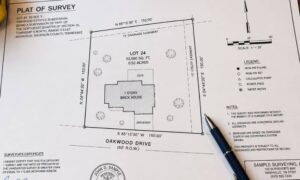
A solid property survey shows:
- Exact lot width and depth
- Front, side, and rear setback lines
- Nearby rights-of-way or alleys
Because of that, designers can place structures correctly the first time. In contrast, skipping this step often leads to redesigns.
Flood risk checks that homeowners overlook
Flood review surprises many property owners. Even if you never had flooding, Metro still checks flood data.
Surveyors use FEMA flood maps and local floodplain layers to confirm risk. If any part of the lot falls within a flood zone, reviewers expect that information to appear on the site plan.
Sometimes, Metro asks for more detail. In those cases, an elevation survey or FEMA elevation certificate may be required. When flood data aligns with the property survey, the review moves forward. When it doesn’t, the permit stops.
Utilities, easements, and the TN 811 timing rule
Utilities cause hidden delays. Many people discover conflicts only after submitting plans.
In Tennessee, state law requires contacting TN 811 at least three working days before digging. While this step happens later in construction, Metro still expects utility awareness during permit review.
A property survey should show:
- Recorded utility easements
- Drainage easements
- Known conflicts within the build area
When easements appear late, projects often need redesigns. That costs time and money. Therefore, addressing utilities early keeps permits on track.
Why Metro expects surveys to support site plans
Metro does not review surveys by themselves. However, it uses survey data to verify site plans. That means the site plan must reflect what the property survey confirms.
A permit-ready site plan usually includes:
- Surveyed boundaries
- Accurate dimensions
- Correct setbacks
- Flood context
- Utility and easement awareness
When these elements match, reviewers spend less time questioning assumptions. As a result, approvals come faster.
Common Nashville permit issues tied to weak surveys
Across Nashville, the same problems show up again and again:
- Using outdated surveys
- Missing easements
- Incorrect lot dimensions
- No flood reference
- Assumed setbacks
Each issue leads to revisions. Each revision adds weeks. In contrast, a current, detailed property survey prevents those delays.
What to ask before you submit to Metro
Before you apply for a permit, pause and ask a few key questions:
- Does this property survey reflect current parcel data?
- Are zoning setbacks verified on the plan?
- Does the site plan reflect flood risk correctly?
- Are easements and utilities addressed early?
These questions shift the process from reactive to proactive. They also help your surveyor and designer work as a team.
Final thoughts:
In Nashville, a property survey does more than show where the lines are. It helps confirm zoning, flood concerns, and overall site conditions. When it’s done properly, it becomes part of how a project moves through Metro, not just a box to check.
If you’re planning to build or make changes, it helps to think about the survey early in the process. Getting the site measured early gives a clear picture from the start, which often leads to fewer questions, faster reviews, and a smoother path to approval.