
When flood warnings go out across Knoxville, many homeowners start asking one important question: Is my house really safe from rising water? The clearest answer often comes from an elevation certificate. This document, prepared by a licensed surveyor, shows how your property sits compared to known flood levels. With it, you can prove your risk to insurers or lenders, lower your premiums, and avoid costly surprises during a sale or refinancing. In short, it’s a simple step that protects both your finances and your peace of mind.
During recent storms, local dams rose more than 21 feet and stored over 182 billion gallons of water—enough to fill Neyland Stadium more than 600 times. That feat kept Knoxville from seeing far worse flooding. But here’s the reality: dams can’t stop every storm. Some neighborhoods will always sit in harm’s way, and that’s where elevation certificates make a huge difference.
A Quick Way to Check Your Risk
Before you even think about hiring a surveyor, you can take a 60-second snapshot of your flood risk. Knoxville has a public map system where you can type in your address, switch on the flood areas layer, and see if your parcel touches a shaded zone. For an extra layer of certainty, you can also cross-check with national flood maps.
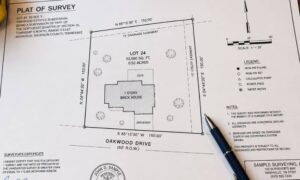
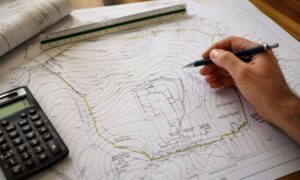
If your property shows up inside or near a flood hazard area, you’ll need to know exactly how your house compares to the Base Flood Elevation. Maps alone can’t tell you that. Only a licensed surveyor can measure your site and prepare an official elevation certificate.
Why Homeowners Need More Than Just Maps
Many people think elevation certificates are only for builders putting up new homes. That’s not true. In fact, the need for this document often shows up for regular homeowners during some of life’s biggest financial steps.
- Flood insurance: Without a certificate, insurers assume the worst. That usually means sky-high premiums. With a certificate, you may prove your home sits above the flood line and cut costs dramatically.
- Mortgage closings: Lenders often refuse to close on a property near a flood zone without an elevation certificate. It protects their investment as much as yours.
- Refinancing: Even if you’ve lived in your house for years, refinancing can trigger a request for updated documentation.
The key takeaway: this isn’t just red tape. It’s the piece of paper that tells banks, insurers, and city officials your home is safe—or alerts you when it’s not.
The Financial Side of the Story
Let’s put real numbers on it. Homeowners without an elevation certificate often pay insurance based on worst-case assumptions. That could mean $2,400 a year in premiums when your true risk level should cost closer to $400. Over a decade, that’s a difference of $20,000.
It doesn’t stop at insurance. Missing a certificate can delay a home sale, stall a refinancing deal, or force last-minute changes in loan paperwork. In the middle of a big life decision, the last thing you want is to be blindsided by a missing document.
Why This Matters After Every Major Storm
Recent storm reports have shown how much debris and runoff can change local waterways. Flood risk isn’t fixed. It shifts after every big weather event.
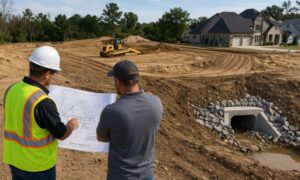
If you’ve recently added fill dirt, changed your drainage, or remodeled your foundation, the numbers on your old certificate may no longer match reality. After a major storm, updating your elevation certificate ensures your insurance and compliance records reflect the true conditions of your property.
What a Local Surveyor Delivers
A licensed land surveyor doesn’t just walk your yard with a tripod. They provide certified, accurate measurements tied to federal flood data. The final elevation certificate includes:
- Photos of your home and lot.
- Elevation readings compared to flood benchmarks.
- Official certification that lenders and insurers can rely on.
In Knoxville, most surveyors can complete this work within one to three weeks. The process is faster when you provide your deed, plat, or parcel number up front. It’s a straightforward investment that pays off in both financial savings and peace of mind.
Taking Action Before the Next Warning
Every time flood alerts roll across East Tennessee, people rush to check their basements, yards, and neighborhood creeks. That scramble is normal, but it shouldn’t be your only plan. An elevation certificate gives you the confidence of knowing exactly where your property stands.
Think of it like weatherproofing your finances. Even if the flood controls hold strong, a certificate is the one document that proves your home’s safety to the people who matter most—banks, insurers, and future buyers. Without it, you’re stuck with assumptions, higher bills, and possible delays.
Closing Thoughts
Flooding is one of the most consistent risks. While local flood controls save lives and property, they can’t guarantee safety for every home. For residents near mapped zones—or anyone refinancing, buying, or selling—an elevation certificate is essential. It’s the bridge between guesswork and certainty.
Instead of waiting for the next flood alert, take a moment now to understand your property’s risk. Checking your address and talking with a licensed surveyor can give you peace of mind and may even save you money before the next storm arrives.