
Buying land or planning a build feels exciting. You picture the house, the driveway, maybe a fence. But one small detail often gets ignored until it becomes a problem: where the property actually ends.
Most people rely on what they can see. A fence. A tree line. The edge of a driveway. It feels clear enough. Still, those things don’t define legal property boundaries. Property line markers do.
If you miss what they mean, you end up guessing. And guessing on land is where mistakes usually start.
What property line markers really are
Property line markers are physical points placed by a surveyor. They show the exact corners of your land.
They don’t draw a visible line across your yard. Instead, they mark specific points, and the boundary runs between them, even if nothing is physically marked in between.
Finding just one marker doesn’t really give you the full picture. You usually need at least two to understand direction, and ideally all corners to see how the property is laid out.
This is where a lot of homeowners get thrown off. People expect a clear line they can follow, but property boundaries don’t work like that. Once you look at it this way, it becomes easier to understand how everything fits together on the ground.
Why you might not see them clearly
Markers are not always obvious. In many cases, they are not meant to be.
Grass grows over them. Soil shifts. Leaves pile up. Over time, they disappear from sight even though they are still there.
Landscaping can also cover them without anyone realizing it. A small grading change, a garden bed, or driveway work can hide them completely. Sometimes they even get disturbed during past construction.
That’s why not seeing a marker does not mean it is missing. It often just means it is not visible anymore.
This is where a basic understanding of property line markers helps. It shifts expectations from “I should see a clear line” to “I need to look carefully for points that define the boundary.”
When property line markers need a closer look
Finding a marker feels like progress, but it does not always settle things.
Markers can move slightly over time. They can get damaged. In some cases, they can be disturbed during digging or yard work. And sometimes, what you find does not match how the property visually feels on the ground.
Maybe a marker sits closer to a structure than expected. Maybe the shape of the lot does not line up with what you assumed. Or maybe you only find one and the rest are missing.
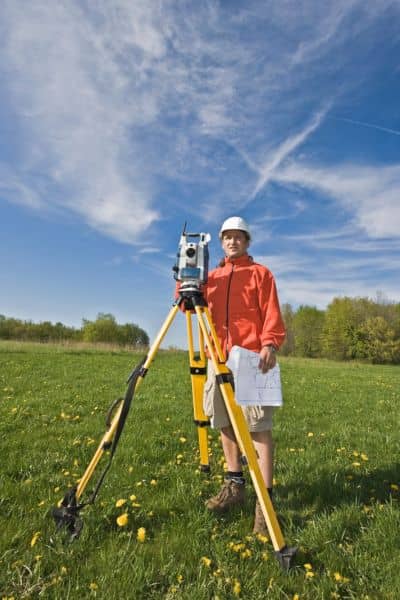
That is usually the point where it stops being something you should guess about. A quick check with a surveyor can clear things up and help you verify property line markers with a land survey before you move forward with building or buying.
Why maps and assumptions can lead you wrong
It is easy to open a phone and look at a property map. It shows lines, shapes, and measurements. It feels accurate.
But those maps are not precise enough for building decisions. They are based on general data, not exact on-site measurements.
Even a small shift can matter. A few feet might not look like much on a screen, but on the ground, it can change where you place a fence, driveway, or structure.
That gap between “what it looks like” and “what it actually is” is where most problems start.
When property line markers matter most before building in Chattanooga
Property line markers matter most when decisions are being made, not after.
Before buying land, they help confirm what you are actually getting. Before building, they show where you can safely place structures. Before adding anything permanent, they help avoid crossing into the wrong area without realizing it.
In Chattanooga, this becomes even more important. Some lots are sloped. Some are heavily wooded. Others have older layouts where markers are harder to spot or understand without context.
In those cases, guessing becomes risky very quickly.
What to do when things do not make sense
If something feels off, it usually is worth slowing down.
Walk the property again. Check the corners. Look carefully near edges where markers are most likely to be. If you still feel unsure, do not rely on assumptions or visual clues.
That is the point where getting confirmation matters. A survey brings clarity when the ground does not give you a clear answer.
It helps you avoid building in the wrong place, buying with hidden surprises, or making changes that cost more to fix later.
Final thoughts
Property line markers seem small, but they control everything about how a piece of land can be used.
They are not always visible. They are not always obvious. And they rarely match what people expect when they first look at a property.
Taking the time to understand them before you build or buy keeps decisions grounded in facts, not assumptions.