How To Find Your Property On FEMA’s Flood Insurance Rate Maps

What are FEMA flood maps?

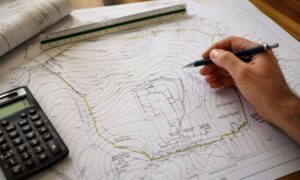
FEMA’s Flood Insurance Rate Maps (FIRMs) or just Flood Maps are provided after a flood risk assessment has been completed or updated for a community.  This study is known as a Flood Insurance Study.  The FIRM gives you the Base Flood Elevations (BFEs) and insurance risk zones in addition to floodplain boundaries.  The FIRM may also show a delineation of the regulatory floodway.

Once the “insurance risk zone”  (commonly referred to as the flood zone) is determined, actuarial rates, based on these risk zones, are then applied for newly constructed, substantially approved, and substantially damaged buildings.  FEMA uses these rates to determine the insurance rate you will pay for flood insurance

FEMA’s Digital Flood Maps

FEMA discontinued the production and distribution of paper flood maps in 2009 as part of its Digital Vision Initiative. This affected all the Flood Maps, boundary information, and study reports. However, clients can still view the products for free through their website or buy them in digital format.

To view these flood maps online, go to FEMA’s Map Service Center and key in your address (hi-lited area shown here) search for your home.  This will prompt you to then select the map that covers your area.  The Flood Maps are somewhat cumbersome to use online. It is best to go through the tutorial on the bottom right of the address search page for an easier and more effective use of the GIS map.

author avatar
Surveyor

More Posts

Water flowing from a street manhole showing civil engineering risk and underground infrastructure issues
civil engineering
Surveyor

What a Water Main Break Teaches About Civil Engineering

A water main broke near the Tennessee State Capitol in Nashville, sending water spilling across the streets, stopping traffic, and slowing businesses nearby. At first, it looked like a sudden accident. But in reality, these things usually start long before anyone notices. Small stresses build over time, quietly weakening the

Read More »

How LiDAR Mapping Helps Find Hidden Drainage Issues

If you’re planning to build on a piece of land, the lot may look perfect at first. It may seem flat, dry, and ready to go. However, what you see on the surface does not always tell the full story. Water moves in quiet ways. After a heavy rain, small

Read More »
Demolition of an old commercial site with heavy equipment during a construction survey to assess existing conditions
land surveying
Surveyor

Old Mall Redevelopment Starts With a Construction Survey

Old malls are changing fast. In North Nashville, the RiverGate Mall site is being cleared to make way for something new. At first, it may look like the hard part starts after demolition. However, that is not the case. Before new buildings rise, one critical step sets everything in motion—a

Read More »
Person measuring fence line in backyard before a land survey for fence installation
land surveying
Surveyor

Why a Land Survey for Fence Costs More Than Expected

You decide to build a fence. It feels like a simple upgrade. You picture the posts, the panels, and the clean line around your yard. So you start planning, and everything seems easy—until someone tells you to get a land survey for fence placement. Then you ask for a quote.And

Read More »
Residential yard with a fallen tree after a storm, showing property line and boundary survey considerations
boundary surveying
Surveyor

Why a Boundary Survey Is Crucial Before Rebuilding

After a strong storm hits Clarksville, the cleanup starts fast. Fences fall over. Trees snap. Yards look very different overnight. So, many homeowners ask the same question: “Can I just rebuild everything where it was before?” At first, that sounds simple. However, after storm damage, what looked right before may

Read More »
Construction surveyor inspecting a trench where an underground pipe failure caused soil movement and safety risk
land surveyor
Surveyor

Pipe Burst Lesson Every Construction Surveyor Should Know

A pipe shot more than 30 feet into the air during a sewer project. It burst out of the ground and shocked everyone nearby. Crews had been working underground, and then, in seconds, the job turned into a safety risk. At first, this sounds like a rare and strange accident.

Read More »