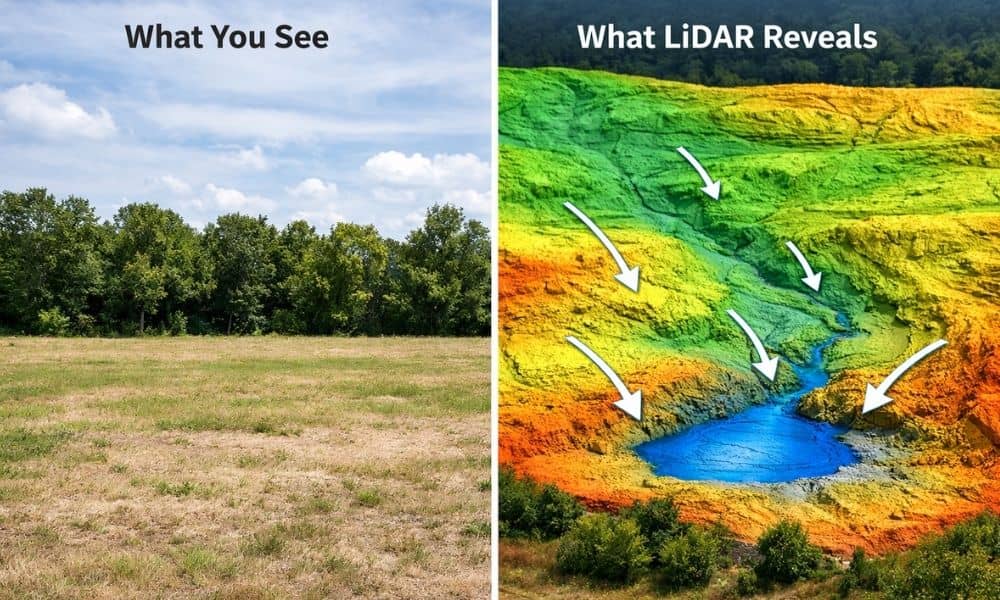
If you’re planning to build on a piece of land, the lot may look perfect at first. It may seem flat, dry, and ready to go. However, what you see on the surface does not always tell the full story. Water moves in quiet ways. After a heavy rain, small dips can turn into puddles. Slight slopes can push water toward your future home. Because of this, many people run into drainage problems they never saw coming. That’s where lidar mapping helps. It gives you a clearer picture of how the ground actually sits, not just how it looks at first glance. It also makes it easier to understand your land before building, which can save you from dealing with problems later on.
Why Drainage Problems Are Common in Chattanooga
Chattanooga has a mix of hills, slopes, and low areas. Because of that, rainwater rarely stays in one place. Instead, it moves across the land and often collects where you least expect it.
At first, a lot may seem dry and stable. However, during a storm, water from higher ground can flow into it. In some cases, nearby roads or neighboring properties also push water toward your land.
At the same time, new construction in the area can change how water moves. As land gets cleared or graded, natural drainage paths shift. So even if a lot looks fine today, it may behave very differently after nearby development.
Because of this, a quick walk on the property is not enough. You need a better way to understand how water will act over time.
What LiDAR Mapping Reveals That You Can’t See
Lidar mapping uses laser data to show the true shape of the ground. Because of that, you can see the real elevation of a property, even under grass and trees.
This matters because even small changes in height can affect how water moves. A slope you barely notice can push water toward your home, while a shallow dip can hold water long after the rain stops. When you look at lidar data, you start to notice things you probably wouldn’t catch during a quick visit, like how the ground actually slopes and drains.
Once you see that, it becomes much easier to understand what might happen after a heavy rain. Instead of guessing, you get a clearer sense of how the land behaves, which helps you make better decisions before you build.
How LiDAR Mapping Helps You Evaluate a Property Before You Build
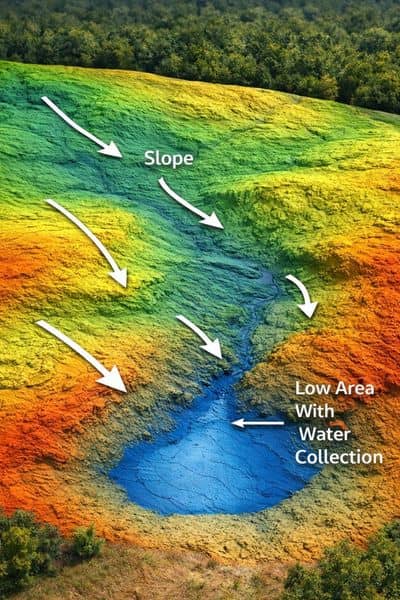
When you look at a property, it’s easy to focus on where the house will sit. However, water does not care about property lines or building pads. It moves across the entire area.
Lidar mapping helps you step back and see the full picture. You can understand how water enters the property, how it travels, and where it might stop.
For example, you may notice that the back of the lot sits slightly higher than the front. Because of that, water will naturally move toward the lower area. If that lower area is where you plan to build, you already have a potential issue.
In other cases, the property may sit lower than the road. That can cause water to flow from the street onto the lot. Over time, this can lead to standing water or drainage stress near the structure.
You may also find subtle low spots that are not obvious during a visit. These areas can turn into problem zones after heavy rain. Even a small dip can hold enough water to affect soil stability.
Because of this, lidar mapping allows you to see risks early. You are not reacting after the fact—you are planning ahead.
The Drainage Mistakes Many Property Owners Make
Many people assume that drainage can be handled later. They believe that once the house is built, any water issues can be fixed.
However, that approach often leads to bigger problems.
Some choose a lot because it “looks flat,” without checking how water flows. Others focus only on the build area and ignore the rest of the property. In some cases, buyers trust that nearby development has already solved drainage concerns.
Unfortunately, these assumptions can be costly.
Water that flows toward the home can lead to pooling near the foundation. Yards may stay wet longer than expected. Fixing these issues later often requires regrading, drainage systems, or other changes that add time and expense.
Because of this, it makes more sense to understand the land before building begins.
Why Catching Drainage Issues Early Changes Everything
When you identify drainage issues early, you gain control over your project.
You can adjust where the structure sits on the lot. You can plan grading work before construction starts. You can also design proper drainage paths that guide water away from the home.
As a result, the building process becomes smoother. There are fewer surprises, fewer delays, and fewer unexpected costs.
More importantly, you protect the long-term value of the property. A well-drained site performs better over time and reduces the risk of damage.
Because of this, early insight is not just helpful—it is essential.
When Basic Data Isn’t Enough for Building Decisions
Some tools offer general elevation data, and they can be helpful for a quick look. However, they often lack the detail needed for real construction planning.
Lidar mapping provides a higher level of accuracy. That accuracy matters when you are making decisions about grading, drainage, and placement.
For projects, where terrain can vary even within a single lot, having precise information makes a big difference.
Instead of working with rough estimates, you work with reliable data. That leads to better planning and better results.
Build Smarter with LiDAR Mapping
At first, drainage issues can be hard to spot. A property may look ready for construction, yet still have hidden risks below the surface.
However, lidar mapping changes that. It helps you see how the land truly behaves before you commit to building.
Because of this, you can make smarter choices from the start. You avoid common mistakes, reduce stress, and move forward with confidence.
If you’re planning to build, taking the time to understand your land is one of the best decisions you can make.