You decide to build a fence. It feels like a simple upgrade. You picture the posts, the panels, and the clean line around your yard. So you start planning, and everything seems easy—until someone tells you to get a land survey for fence placement.
Then you ask for a quote.
And suddenly, the price feels off.
Many homeowners hit this same moment. They pause, question the cost, and wonder if the survey is even needed. However, the surprise does not come from the work being overpriced. Instead, it comes from not fully understanding what’s actually involved in the process.
Let’s walk through why that happens.
Why a Fence Project Feels Simple—but Isn’t
At first, a fence feels like a basic home project. You choose where it goes, hire a contractor, and move forward. However, a fence does something important. It defines the edge of your property.
That means the placement must be correct.
Even a small mistake can cause issues. For example, if your fence crosses into your neighbor’s land, you may need to remove it later. In some cases, that leads to tension, delays, or added cost. Because of that, guessing the boundary is never a good idea.
So, while a fence looks simple, it sits on a legal line. And that line must be verified, not assumed.
Where the Expectation Gap Starts
This is where most homeowners get surprised.
Many people believe a survey is quick and easy. They imagine someone walking around, measuring a few spots, and marking corners. Because of that, they expect a low price.
However, the real process looks very different.
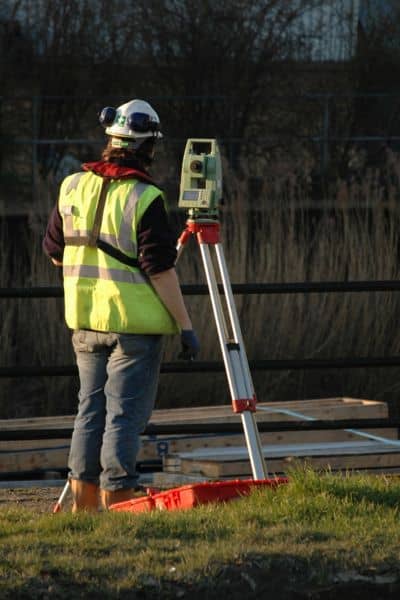
A surveyor does not just measure land. Instead, they confirm the exact boundary using records and fieldwork. First, they study documents like deeds and old maps. Then, they visit the site and locate existing markers—or rebuild them if needed. After that, they check everything again using precise tools.
So, a land survey for fence placement involves both research and fieldwork. It is careful work that carries legal responsibility.
Once homeowners see that, the price starts to make more sense.
Why Fence Projects Often Lead to Higher Quotes
Fence projects come with one big challenge. They require accuracy right at the edge of your property. Because of that, surveyors must take extra care.
In many cases, property markers are not easy to find. Over time, they may shift, fade, or disappear. As a result, the surveyor cannot rely on what is visible. Instead, they must rebuild the boundary based on records.
At the same time, homeowners often ask for “just the fence line.” That sounds simple, but it still connects to the full boundary. The surveyor must make sure that the line is correct within the bigger picture.
So, even a small fence project can involve more work than expected.
Why Online Estimates Don’t Match Reality
Many homeowners check prices online before calling a surveyor. They see numbers that seem low and assume that will apply to their property.
However, those numbers often reflect ideal situations.
For example, online estimates may assume clear markers, simple lot shapes, and easy access. In real life, things are rarely that simple. Your property may have slopes, trees, or missing records. Because of that, the actual work can take more time.
So, when the real quote comes in, it feels higher—even though it matches the effort required.
That gap between expectation and reality is where the surprise begins.
Why Skipping the Survey Can Lead to Bigger Problems
At this point, some homeowners think about skipping the survey to save money. While that may seem like a smart move, it often creates more problems later.
If the fence ends up in the wrong place, fixing it can be costly. You may need to move sections, adjust the layout, or deal with neighbor concerns. In some cases, the delay alone can affect your project timeline.
Because of that, a land survey for fence placement acts as a safeguard. It helps you avoid mistakes before they happen.
In the long run, it often saves both time and money.
What Really Affects the Cost of a Land Survey for Fence Projects
The cost of a survey depends on several real factors, not random pricing.
First, the size and shape of your property matter. Larger or irregular lots take more time to measure. Next, the terrain plays a role. Slopes, trees, and obstacles make the work more complex.
Also, the condition of existing records affects the process. If documents are missing or unclear, the surveyor must spend more time researching. On top of that, access to the fence line can slow things down if the area is hard to reach.
Because every property is different, every survey is different too.
How Homeowners Can Approach Fence Surveys More Confidently
Even though the cost may feel high at first, you can take simple steps to make the process smoother.
Start by gathering any documents you already have. Old surveys or property records can help. Then, explain your plans clearly so the surveyor understands your goal.
It also helps to plan early. When you allow enough time, the process feels less rushed and more controlled. At the same time, asking questions can give you a clearer picture of what is included.
With the right approach, the survey becomes easier to understand—and easier to trust.
When a Land Survey for Fence Work Becomes Essential
Some situations carry more risk than others. In those cases, a survey becomes especially important.
If you cannot find property markers, you should not guess. If your fence will sit close to the boundary, accuracy matters even more. Also, if you recently bought the property, you may not have reliable information yet.
In these situations, a land survey for fence placement gives you the clarity you need before building.
Final Thoughts
A fence project may start as a simple idea, but it quickly connects to something bigger—your property boundary.
That is why many homeowners feel surprised by the cost of a land survey for fence work. The price reflects careful effort, precise tools, and legal accuracy. It is not just about measuring land. It is about getting it right.
In the end, the goal is not just to build a fence. It is to build it in the right place, with confidence, and without future problems.
And once you see the full picture, the surprise starts to fade—and the value becomes clear.